
Hail and high wind can damage a roof in ways you cannot see from the driveway. A shingle that looks fine from the ground may have lost granules, cracked at the mat, or had its seal broken so the next storm lifts it. Our free storm damage inspection gets on the roof, documents what is there, and tells you plainly whether you have damage worth acting on.
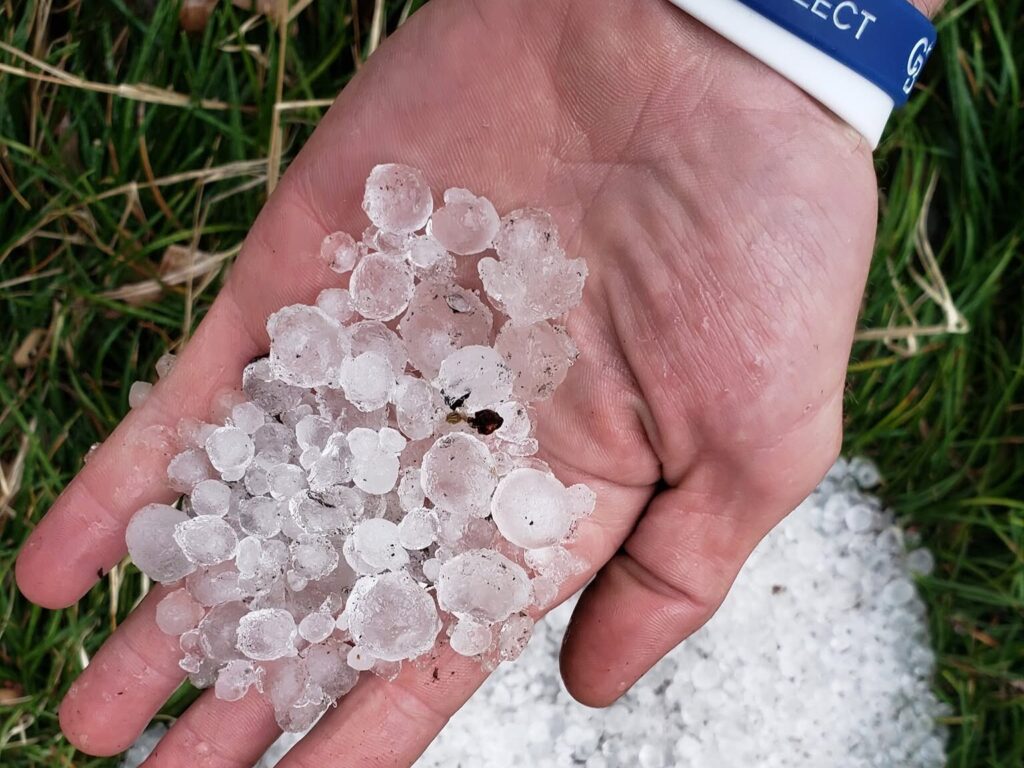
Signs your roof may have storm damage
- Dented gutters, downspouts, vents or window screens after hail. If soft metal took hits, the roof probably did too.
- Granules collecting at the bottom of downspouts or on the driveway.
- Missing, creased or lifted shingles, or shingle pieces in the yard after high wind.
- New water stains on ceilings or damp spots in the attic.
- Damage to neighbors’ roofs on your street, even if yours looks fine from below.
What hail and wind do to a roof
Hail
Hail bruises asphalt shingles, knocks off the protective granules and can fracture the fiberglass mat underneath. The damage usually shows up as dark, soft spots or exposed areas that age faster in the sun. Hail also dents metal vents, flashing and gutters.
Wind
Strong gusts get under shingle edges, break the adhesive seal and crease or tear shingles off. Ridge caps, edges and older roofs are most at risk. A roof can lose its seal in one storm and start leaking in the next, so wind damage is worth checking even when nothing is missing yet.
With wind damage we do a shingle analysis and work out whether the roof can be repaired properly. If it reasonably can, that is what we recommend, rather than pushing you toward a replacement claim. If it cannot, we document why and explain what your options are from there.
What our storm inspection includes
- A walk of the roof surface, ridges, valleys and edges, where safe to do so.
- A check of flashing, vents, pipe boots, skylights and gutters.
- An attic check for leaks or daylight, where the attic is accessible.
- Photos of what we find, so you can see the damage yourself.
- A plain explanation of whether the damage calls for repair, replacement or no action at all.
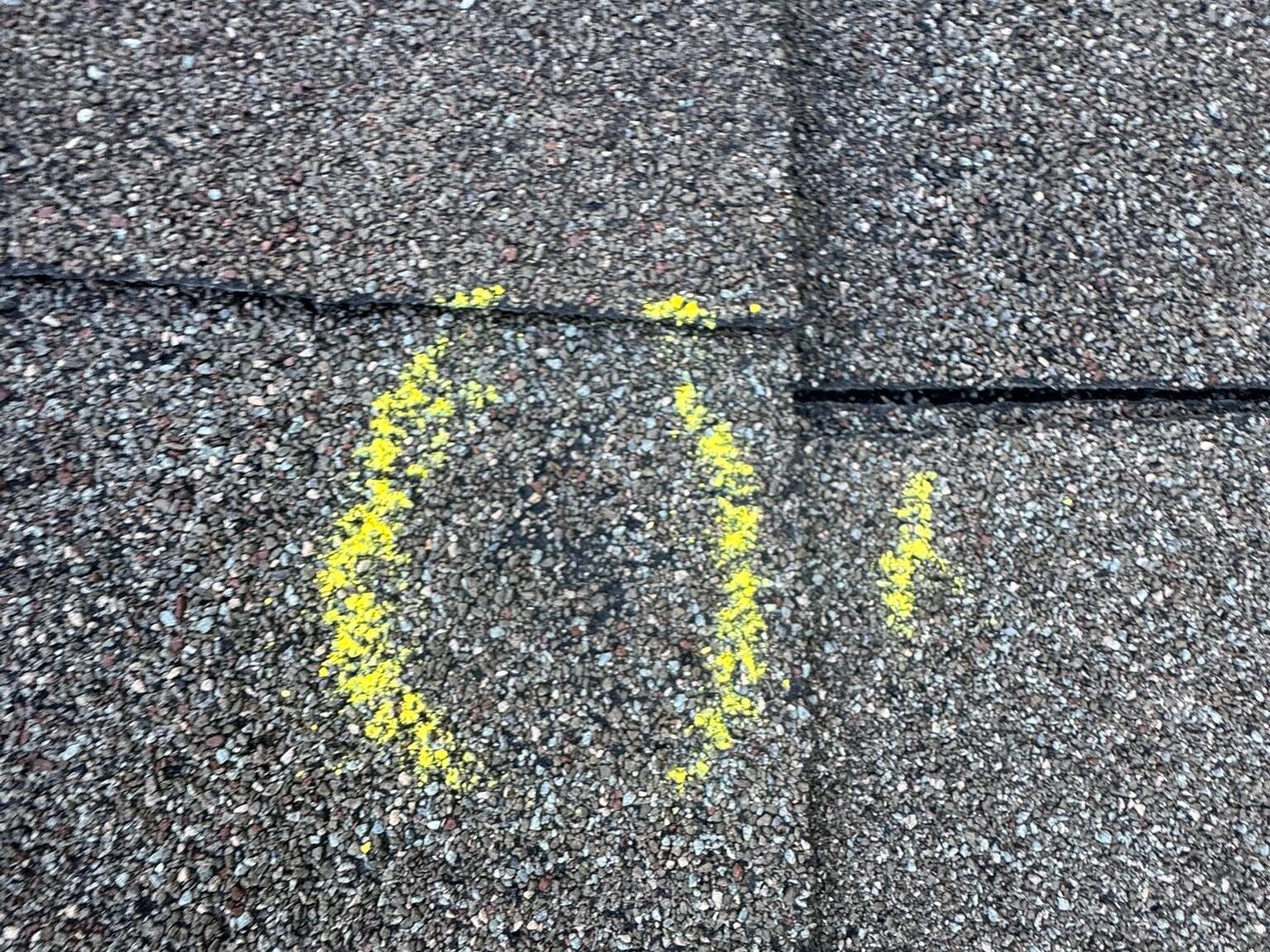
No damage? We will tell you. Not every storm harms every roof. If yours came through fine, you will hear that from us, along with anything worth keeping an eye on.
Storm came through? Book a free storm inspection.
Tell us what is going on and we will set a time that works for you. No pressure, no obligation — just clear answers from a local, family-owned team.
Related: roof insurance claim help or emergency roof repair.
We document first, you decide
We do not start by telling homeowners to file a claim. We start by finding out what is actually wrong with the roof. The order we work in is the same every time:
- Inspect the roof thoroughly, along with the other parts of the property that matter after a storm.
- Photograph the conditions and damage we find.
- Prepare a complete estimate covering the work that is genuinely needed.
- Walk you through what we found before anyone talks about next steps.
- Hand you a documentation package, photos and the estimate, that you can give your insurance company yourself if you decide to file.
The point of working that way is simple: you have the documentation in hand before the adjuster arrives, so the adjuster can examine and verify the damage we reported. The claim stays yours. We do not file it for you, and we never tell you what your insurer will approve.
Insurance and storm damage
Whether storm damage is covered depends on your policy, and only your insurance company decides that. Our photos, findings and estimate give you clear information to share with your insurer yourself. Under Oklahoma law, roofing contractors may not offer or promise to pay any part of your insurance deductible, and we do not. See roof insurance claim help for how the process works.
After a storm: what to do first
- Stay off the roof. Wet or damaged roofs are dangerous.
- Photograph damage you can see safely from the ground and inside your home.
- Cover belongings under any active leak and catch water where you can.
- Be cautious with door-to-door offers right after a storm. Oklahoma requires roofing contractors to be registered with the Construction Industries Board, and you can ask any contractor for their registration. Ours is Oklahoma Roofing Contractor Registration #80004991.
- Call 918-703-3735 or request a free inspection below.
Storm damage questions
How soon after a storm should I get an inspection?
As soon as it is practical. Damage is easier to document while it is fresh, and a damaged roof can let water in during the next rain. Your policy may also have time limits for reporting a claim, so check with your insurer.
Can you tell hail damage from normal wear?
Usually, yes. Hail hits tend to be random and leave soft, bruised spots or fresh fractures, while wear shows up as even granule loss, cracking or curling across the roof. We will show you photos and explain the difference on your roof.
Will filing a claim raise my premium?
That depends on your insurer and policy. We can document the condition of your roof, but questions about premiums and coverage are best answered by your insurance agent.
Do you handle the repair after the inspection?
Yes. If you decide to move forward, we handle the repair or replacement, from ordering materials to cleanup. On a replacement, the Catch-All system protects the landscaping around the house, and our project manager checks and photographs the work as it goes.
Rebuilding after a storm? A replacement roof can be built to the IBHS FORTIFIED Roof standard, which is designed to hold up better in high wind. Family Tree Roofing is FORTIFIED Certified; ask about it during your free inspection.