
Family Tree Roofing installs residential metal roofing across Tulsa and the surrounding communities we serve — standing seam and exposed-fastener panels, metal shingles and metal tile systems including DECRA products, and copper roofing with custom copper components. Metal is a different craft from asphalt shingles: the materials are ordered for the roof they are going on, every edge and penetration is flashed for a roof that moves with the heat and cold, and the installation details decide whether the roof performs for decades. If you are weighing a metal roof, or you want copper on a bay window or another feature of your home, start with a free inspection and a straight answer about what fits your house and your budget.
Metal roofing systems we install
We primarily order prefabricated metal roofing materials and components from our suppliers, and we select the system, the metal and the trim for each job’s requirements — the roof’s pitch and shape, the look you want and your budget. Not every product or installation method suits every house, which is why the conversation starts with an inspection rather than a catalog.
Standing seam metal roofing
Standing seam panels run from the ridge to the eave and lock together at raised seams, with the fasteners hidden beneath the panels. Hidden fasteners mean fewer holes in the roof surface, and the panels can expand and contract with Oklahoma’s temperature swings without working screws loose. It is the cleanest, most architectural look in metal roofing and usually the higher-cost option.
Exposed-fastener metal roofing
Exposed-fastener panels are screwed through the face of the panel into the roof deck, with a sealing washer under each screw head. They cost less than standing seam, go on faster and are a practical choice for many homes, porches and outbuildings. The trade-off is maintenance: those washers age in the sun, so the fasteners should be checked periodically and replaced as they weather.
Metal shingles and metal tile systems, including DECRA
Metal shingles and metal tiles are formed panels that give you the look of shingles, shakes, slate or tile with the performance of a metal roof. We install DECRA metal roofing products among these systems. Because the panels interlock and are installed in courses like a traditional roof, they suit homes and neighborhoods where a standing seam look would feel out of place.
Copper roofing and custom copper components
Copper is chosen for its appearance and its longevity. It needs no paint or coating, and it develops its patina naturally over the years. We install copper roofing and custom copper components — a bay-window roof, a porch or entry roof, a chimney cap or a decorative feature — selecting and ordering the copper components for the shape of the feature, then fitting, flashing and fastening them on site so they stay watertight through our storms.
Real copper roofing work in South Tulsa
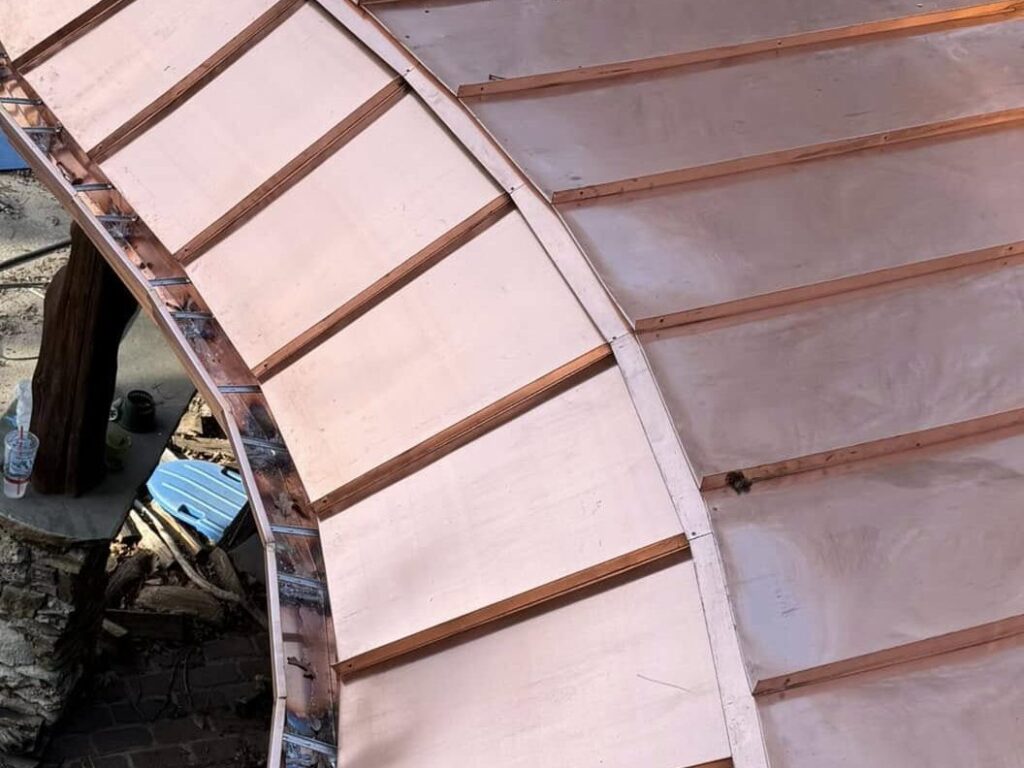
The curved copper roof in this photograph is our work on a home in South Tulsa, Oklahoma, and it shows the kind of detail that metal makes possible on a house. We have also completed a separate copper roofing project in Broken Arrow. If you live in Tulsa, Broken Arrow or anywhere across our service area and want copper or custom metal on part of your home, we are glad to look at it.
Why we always tear off the old shingles first
Family Tree Roofing does not install metal over existing shingles. On every metal roof we remove the old asphalt shingles down to the deck first. Some manufacturers and some cities allow metal over a single layer of shingles in certain situations — tear-off first is our company policy, and here is why we hold it:
- We see the deck. Soft or rotten decking, old leak paths and loose fasteners only show once the shingles are off. We replace damaged decking before anything goes back on, because a metal roof is only as good as what is under it.
- Metal wants a flat, solid base. Old shingle ridges and cupped tabs can telegraph through metal panels and work against the fasteners. A clean deck gives the panels the even surface they are designed for.
- The right underlayment and flashing. Tear-off lets us install the underlayment the metal system calls for and set flashing at the correct height at walls, chimneys and penetrations instead of working around an old roof.
- Ventilation gets corrected. With the deck exposed we can fix intake and exhaust attic ventilation at the same time, which matters for the attic and for the roof above it.
Tear-off adds labor and disposal to the job. We think it is the difference between a metal roof that performs and one that hides the problems it was supposed to solve. We believe in installing roofing systems, not just roofs, and on a metal roof that system starts at the deck.
Metal roofing or asphalt shingles?
Both are good roofs when they are installed well. The honest differences:
- Service life. A well-installed metal roof is generally expected to outlast asphalt shingles, often by decades, and copper longer still. The real number depends on the metal, the finish, the installation and the weather it sees, so we do not promise a figure.
- Cost. Metal costs more up front. The longer service life and lower upkeep offset that over time for some homeowners and not for others; we price your roof both ways when it helps you compare.
- Weight. Metal roofing is lighter than most shingle roofs, which is easy on the structure.
- Appearance. Metal offers standing seam, shingle, shake, slate and tile profiles in a wide color range; asphalt shingles blend into most neighborhoods. Some HOAs restrict metal roofing or specific colors, so check the rules early — we can help you read them.
- Storms. Metal does not shed granules or lose tabs in high wind the way worn shingles can, but large hail can dent it (more on that below). Wind performance depends on the system and on the fastening and edge details — the part of the job we take the most care with.
Durability, maintenance and appearance
Metal needs less attention than shingles, not none. Painted finishes can chalk and fade gradually in Oklahoma sun, and darker colors show it first; unpainted metals weather to a softer tone, and copper turns from bright to brown to green over the years. Keep valleys and gutters clear so water and debris are not sitting against the panels, and keep foot traffic off the roof — metal panels and trim can be dented by a careless step. On exposed-fastener roofs, have the screws and washers checked every few years and replaced as they weather. Standing seam roofs are designed to move: the clips that hold the panels let them expand and contract, and the light ticking you may hear on a hot afternoon is that movement, not a problem.
One appearance note worth knowing before you choose: wide, flat panel areas can show a faint waviness called oil-canning, especially in low sun and with dark colors. It is a visual characteristic of sheet metal rather than a defect, and panel choice, color and a flat deck all reduce it.
Hail, coatings and the honest limitations
- Hail. Metal does not crack or shed granules the way shingles do, but large hail can leave dents. Dents are usually cosmetic rather than leaks — and that matters for insurance, because many Oklahoma policies limit or exclude cosmetic damage on metal roofs. Read your policy or ask your agent before you decide. Some metal products carry impact ratings; ask us which ones, and we will tell you what the rating does and does not mean.
- Coatings and finishes. The finish is the product’s, not ours: its performance and any finish warranty come from the manufacturer, and we give you that documentation rather than our own promise. Scratches through a painted finish should be touched up so the metal underneath stays protected.
- Repairs and matching. Replacement panels and trim may not match a finish that has weathered for years, and a repair on a standing seam roof can mean unlocking several panels, not one.
- Ice and snow. Snow and ice slide off smooth metal, which is good for the roof and a hazard over a door or walkway. Snow guards above entries are a sensible add-on for an Oklahoma ice storm.
- Not every roof. Some profiles have a minimum pitch, some neighborhoods have rules, and metal is not the right spend for every budget or every plan to move. We will say so when it is not the right fit.
Warranty on a metal roof
The metal, the finish and the components carry the manufacturer’s warranty, and we give you that paperwork. Our lifetime labor and workmanship warranty applies to qualifying roofing systems installed to our full standards and covers the work we perform, including flashing, valleys and penetrations; components you choose not to replace are not covered. Whether your metal system qualifies, and exactly what is covered, is spelled out in writing: your inspector goes through the written warranty for your specific system with you before anything is signed.
How a metal roofing project works with us
- Free inspection and roof evaluation. We look at the roof deck from the attic side, the pitch, the penetrations and the ventilation, and we take the measurements the materials will be ordered from.
- Choosing the system and materials. Standing seam, exposed-fastener, metal shingle or tile, DECRA, or copper for a feature — we walk you through the options that fit your home, tell you what we would choose and why, and price it clearly.
- Ordering and scheduling. The materials and components are ordered for your roof from our suppliers. Start dates vary with the materials selected, supplier availability and the complexity of the project, so once the roof is evaluated and the system is chosen we give you project-specific scheduling expectations rather than a one-size-fits-all promise.
- Property protection, tear-off and deck repair. We set up the Catch-All system to protect landscaping and the vulnerable areas around the house. Then the old shingles come off, the deck is inspected and damaged decking is replaced.
- Underlayment, flashing and ventilation. The underlayment for the system goes down, flashing is set at every wall, chimney, vent and skylight, and ventilation is corrected before the first panel goes on.
- Installation and oversight. Our project manager, Kevin, manages the work on site, checks the workmanship and photographs the job as it goes; when projects overlap, he coordinates supervision with our project consultants. Panels, ridge, eave and gable trim are fitted and fastened one at a time by a crew with specialized metal roofing installation training — the part of the job that cannot be rushed.
- Cleanup and walkthrough. We clean up, walk the finished roof with you, hand over the manufacturer documentation for your materials, go over the photos from the job and explain what to watch for and when to have the roof checked.
Metal roofing and your insurance
If a storm has damaged your shingle roof and you would like to replace it with metal, your insurance company decides what your policy pays for — the shingle roof you had — and the cost of upgrading beyond the roof you had is generally the homeowner’s. We document the storm damage, give you a documentation package you can hand to your insurer, and give you a clear price for the upgrade so there are no surprises. We never pay or waive deductibles, and we do not promise that a metal roof will change your premium — that is your insurer’s decision. Read more about roof insurance claim help and storm damage roof repair.
Thinking about metal? Start with a free inspection.
Tell us about your roof, or the feature you want in copper or custom metal, and we will set a time that works for you. No pressure, no obligation — just straight answers from a local, family-owned team.
Comparing options? See roof replacement or FORTIFIED Roof.
Metal roofing questions
Do you install complete metal roofs or only accents?
Both. We install complete residential metal roofs — standing seam, exposed-fastener, metal shingle and metal tile systems including DECRA products — and we install copper roofing and custom copper components on features such as a bay window.
Can metal be installed over my existing shingles?
Not by us. Family Tree Roofing always removes the existing asphalt shingles before installing a metal roof so we can inspect and repair the deck, install the right underlayment and flashing, and give the panels a flat, solid base. It is our company policy on every metal roof.
Will hail damage a metal roof?
Large hail can dent metal, but dents are usually cosmetic and the roof keeps shedding water. Because many Oklahoma policies treat cosmetic damage to metal roofs differently from shingle damage, check your policy before you choose metal.
How long does a metal roof last?
Longer than asphalt shingles in most cases — often by decades, with copper lasting longer still — but the number depends on the metal, the finish, the installation and the weather, so we talk about your roof and your materials rather than quoting one figure for every home.
Are you certified by a metal roofing manufacturer?
No. Our crews have specialized metal roofing installation training, and we do not hold or advertise a metal-specific manufacturer certification. Our Malarkey and Owens Corning designations are shingle programs and are separate from our metal work.
How soon can you start a metal roof?
It varies. Start dates depend on the materials you select, on supplier availability and on the complexity of the project. After the inspection and once the system is chosen, we give you scheduling expectations for your specific project rather than a fixed number of weeks.
Is a metal roof loud when it rains?
Not when it is installed over a solid roof deck with underlayment, which is how we install it. The “tin roof” sound comes from open-frame barns and sheds.
Do you do metal roofing on commercial buildings?
This page is about homes. Family Tree Roofing is a residential roofing company, and our metal and copper work is for houses.