
A FORTIFIED Roof is a roof replacement built to a stronger standard developed by the Insurance Institute for Business & Home Safety (IBHS), a nonprofit research organization supported by the property insurance industry. It goes beyond a standard reroof: the roof deck is re-nailed, the deck is sealed so water stays out even if shingles blow off, the edges are reinforced, and the work is checked by an independent evaluator. In Oklahoma, where high wind and hail are part of life, it is one of the most practical upgrades to consider when your roof needs replacing anyway.
Our FORTIFIED certification
Family Tree Roofing is FORTIFIED Certified through the IBHS FORTIFIED program, the certification the 2025 standard requires of the contractor who installs a FORTIFIED Roof. We plan each FORTIFIED job around the standard’s requirements and the photo documentation an independent evaluator needs, and we explain the added steps and cost before any work begins.
Our FORTIFIED certification comes through the IBHS FORTIFIED program and is separate from our Oklahoma roofing registration, shown further down this page. Certification is not an endorsement by IBHS, and a home receives a FORTIFIED designation only after an independent evaluator verifies the work and IBHS approves it.
What is a FORTIFIED Roof?
FORTIFIED is a voluntary program based on decades of IBHS research into how homes fail in severe weather. FORTIFIED Roof is the first of the three FORTIFIED Home levels (Roof, Silver and Gold), and it focuses on the part of the house that usually fails first in a storm: the roof.
The idea is simple. A standard roof can lose shingles in high wind, and once the deck is exposed, wind-driven rain can soak insulation, drywall and belongings. A FORTIFIED Roof is built so the deck stays attached, the edges stay put, and the home stays drier even if some shingles come off.
FORTIFIED Roof installation requirements
IBHS updated the FORTIFIED Home standard in 2025. Contractors could begin using the new edition on January 1, 2025, and it has been required for FORTIFIED Home since November 1, 2025. The main requirements include:
01
Stronger deck nailing
The roof deck is re-nailed with ring-shank nails in the tighter nailing pattern now required on every FORTIFIED roof deck. Damaged decking is replaced.
02
A sealed roof deck
Deck seams are sealed, or the deck is covered with an approved underlayment system, so wind-driven rain cannot pour in if shingles are lost.
03
Reinforced roof edges
Drip edge and starter strips at the eaves and rakes are installed and fastened to the standard, because roof damage often starts at the edges.
04
Wind-rated shingles
Shingles rated for high wind are installed with the high-wind nailing pattern the standard calls for.
05
Tested roof vents
Under the 2025 standard, roof-mounted vents must meet testing requirements showing they keep out wind-driven rain.
06
Flashing done right
Walls, valleys, chimneys and other roof penetrations are flashed and sealed to the standard.
07
Optional hail supplement
For the hail supplement, asphalt shingles must be rated Good or Excellent in the IBHS Impact-Resistant Shingle Performance Ratings.
08
A certified installer
Under the 2025 standard, FORTIFIED roofs must be installed by a roofing contractor certified through the FORTIFIED program. Family Tree Roofing is FORTIFIED Certified.
The inspection and designation process
- Free roof inspection. We inspect your roof, confirm whether it is a good candidate, and explain what a FORTIFIED Roof involves compared with a standard replacement, including the added cost.
- An independent evaluator. A certified FORTIFIED evaluator, separate from the roofing contractor, is involved from the start because IBHS requires independent verification.
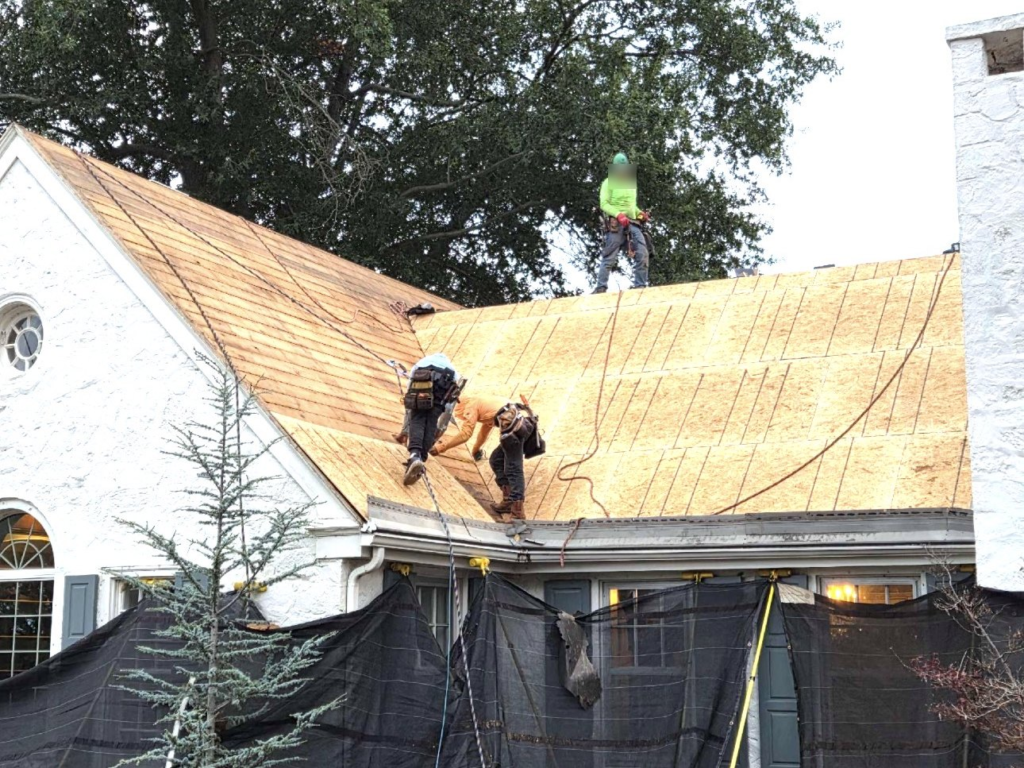
- Documentation during the job. Each required step is photographed as it happens: deck nailing, the sealed deck, underlayment, drip edge, starter strips, vents and product labels.
- IBHS review. The evaluator submits the documentation to IBHS. IBHS issues a FORTIFIED designation certificate for the home only when every requirement is met.
The designation is issued by IBHS, not by the roofing contractor, so no contractor can guarantee it in advance. Following the standard closely and documenting every step is what makes approval possible.
Potential storm-resistance benefits
- Designed to keep the deck attached. Tighter ring-shank nailing helps the roof deck resist being pulled off in high wind.
- Designed to limit water damage. A sealed deck helps keep rain out of the attic and living space if shingles are blown off.
- Designed to resist edge failure. Reinforced eaves and rakes help stop wind from getting under the roof covering.
- Better hail performance, if you choose it. The optional hail supplement uses shingles rated Good or Excellent for impact resistance.
No roof is storm-proof. A FORTIFIED Roof is built to perform better than a typical roof in many severe-weather events, but results depend on the storm and the home. Some insurers offer a premium discount for homes with a FORTIFIED designation. Whether you qualify, and how much, depends on your insurance company and policy, so ask your agent before you decide. We cannot promise any particular savings.
Thinking about a FORTIFIED Roof?
Start with a free roof inspection. We will tell you honestly whether your roof needs replacing and what the FORTIFIED steps would add.
Comparing options? See roof replacement or storm damage roof repair.
Strengthen Oklahoma Homes grants
The Oklahoma Insurance Department runs the Strengthen Oklahoma Homes program, which offers grants of up to $10,000 toward upgrading a home to a FORTIFIED Roof. Based on the program’s published rules (checked October 2026):
Who is eligible
- The home must be an owner-occupied, single-family primary residence in Oklahoma. Apartments, duplexes, condominiums, manufactured homes and mobile homes are not eligible.
- You need a homestead exemption on file for the home.
- You need an active homeowners insurance policy with wind coverage, plus flood insurance if the home is in a Special Flood Hazard Area.
- The home must be in good repair, except for damage from a tornado, catastrophic windstorm or hail.
How the program works
- You apply through the department’s grant portal when funding is open.
- An approved FORTIFIED evaluator does a pre-evaluation of the home. The homeowner pays the evaluator.
- You choose three contractors from the program’s approved contractor list to submit bids.
- Do not start the work before you receive your award letter. The program states that starting work early makes the home ineligible.
- The grant is paid directly to the contractor after the work and paperwork are complete. Costs above the award, evaluator fees and insurance deductibles are the homeowner’s responsibility.
- Funding opens periodically and is awarded first-come, first-served, so a grant is never guaranteed.
Program rules change, so check current details with the Oklahoma Insurance Department before planning around a grant. We are happy to talk through how the program fits with your roof replacement plans. The program keeps its own approved contractor list, separate from FORTIFIED certification, so check the current list when you choose your bidders.
Oklahoma roofing registration
Oklahoma Residential Roofing Registration #80004991, issued by the Oklahoma Construction Industries Board to Family Tree Contracting, LLC. Verify with the CIB.
This state registration is what allows us to perform residential roofing in Oklahoma. It is separate from, and not the same as, our FORTIFIED certification.
Is a FORTIFIED Roof right for my home?
It is most practical when your roof needs replacing, from age or storm damage, because much of the work happens during any replacement. If your roof still has good life left, we will tell you so. Call 918-703-3735 or request a free inspection below and we will walk you through the added steps and cost so you can decide without pressure.
Several FORTIFIED steps overlap with how we already replace roofs: a complete tear-off to the bare decking, damaged or unsuitable decking replaced, protected valleys, new step flashing where the roof meets a wall, and photos taken as the job goes. A FORTIFIED Roof adds the standard’s own nailing, deck-sealing, edge, vent and documentation requirements and the independent evaluator, and we show you what those added steps cost before you decide.
Frequently asked questions
Is a FORTIFIED Roof the same as impact-resistant shingles?
No. Impact-resistant shingles can be part of a FORTIFIED Roof through the optional hail supplement, but the standard also covers deck nailing, a sealed roof deck, edges, vents and flashing. Shingles alone do not earn a FORTIFIED designation.
Who issues the FORTIFIED designation?
IBHS issues it after an independent certified FORTIFIED evaluator verifies and documents that the roof meets the standard.
Does your FORTIFIED certification mean my home is FORTIFIED?
No. Our certification means Family Tree Roofing is FORTIFIED Certified through the IBHS FORTIFIED program, which the 2025 standard requires of the contractor who installs a FORTIFIED Roof. Your home earns a FORTIFIED designation only after an independent evaluator verifies the work and IBHS approves it, and our certification is not an endorsement of our company by IBHS.
Can my existing roof be made FORTIFIED without replacing it?
The FORTIFIED Roof standard is applied during a roof replacement, because the deck has to be exposed to re-nail and seal it.
Will my insurance premium go down?
It may. Discounts depend on your insurer and policy, and your agent can tell you what applies to you. We cannot promise savings.
Will I get a Strengthen Oklahoma Homes grant?
Not guaranteed. Grants depend on eligibility, available funding and the program’s first-come, first-served process. Check current rules with the Oklahoma Insurance Department.
Can I start my roof now and apply for a grant later?
No. Under the program’s rules, work must not begin until you have the award letter.
Is FORTIFIED the same as a roofing license?
No. Roofing contractors in Oklahoma register with the Construction Industries Board. FORTIFIED is a separate, voluntary program run by IBHS, and each is verified separately.
Related services
Sources: IBHS, updated FORTIFIED standards; Oklahoma Insurance Department, Strengthen Oklahoma Homes. Checked October 2026.