
A roof is more than shingles. Underneath, the attic has to breathe, and in an Oklahoma summer that matters. For Coweta homeowners, here is how attic ventilation affects your roof and your comfort, and what we check.
Roofing in Coweta: what’s different
Coweta (9,654 residents in 2020, Wagoner County) is about 13 miles east of our office, and its homes know severe weather: an EF1 tornado with 100–110-mph winds crossed south Coweta on October 10, 2021, damaging numerous homes, and 81-mph winds hit the Easley Airport area on June 17, 2023. Attic ventilation — the focus of this page — is what keeps a roof healthy between storms, and it is the first thing we check on hot Coweta upstairs rooms. The city issues trade permits per trade, requires contractors to register with the City of Coweta, and allows homeowners to self-perform some roofing work on their own property; whether a shingle-only re-roof needs a permit is not spelled out on the city’s site, so we confirm with Community Development before starting.
Why attic ventilation matters
Intake vents along the eaves and soffits let cooler outside air in. Exhaust vents near the ridge let hot, moist air out. When the two are balanced, heat and moisture do not build up in the attic. When they are not, the attic overheats, shingles age faster, moisture can collect on the roof deck, and upstairs rooms get harder to cool.
Shingle manufacturers include ventilation requirements in their installation instructions, which is why we check ventilation on every roof we inspect.
Signs of a ventilation problem
01
A very hot attic
An attic that feels like an oven in summer, and upstairs rooms that never cool down.
02
Moisture or mildew
Damp insulation, mildew or water stains on the underside of the roof deck.
03
Rusty nails
Rust on the nail tips poking through the deck is a sign of moisture in the attic.
04
Shingles aging early
Curling, blistering or granule loss on a roof that should have more years left.
05
Blocked soffit vents
Insulation pushed against the eaves can choke off intake air.
06
Mixed exhaust vents
Combining vent types, such as a ridge vent with box vents, can short-circuit airflow.
We calculate ventilation on every estimate
Ventilation is not a line we add at the end. For every roofing estimate we calculate what the attic needs and compare it with what is actually up there, then show you the numbers, the improvement options and the price of each. Intake and exhaust are designed together around the shape of the roof: a long ranch ridge, a hip roof and a two-story roof broken up by gables do not move air the same way.
Depending on the roof, the answer may be ridge vent, box vents, added soffit intake, or occasionally a powered or solar fan, but we never start from a fan by default. If we see staining that could be mold or mildew, we photograph it and suggest having it evaluated, since diagnosing it is outside a roofer’s job.
How we fix it
- Balance intake and exhaust so air moves through the whole attic.
- Clear blocked soffit vents or add intake where there is too little.
- Install ridge vents or other exhaust that suits your roof.
- Replace cracked or damaged vents.
- Correct ventilation as part of a roof replacement, when it is easiest to do.
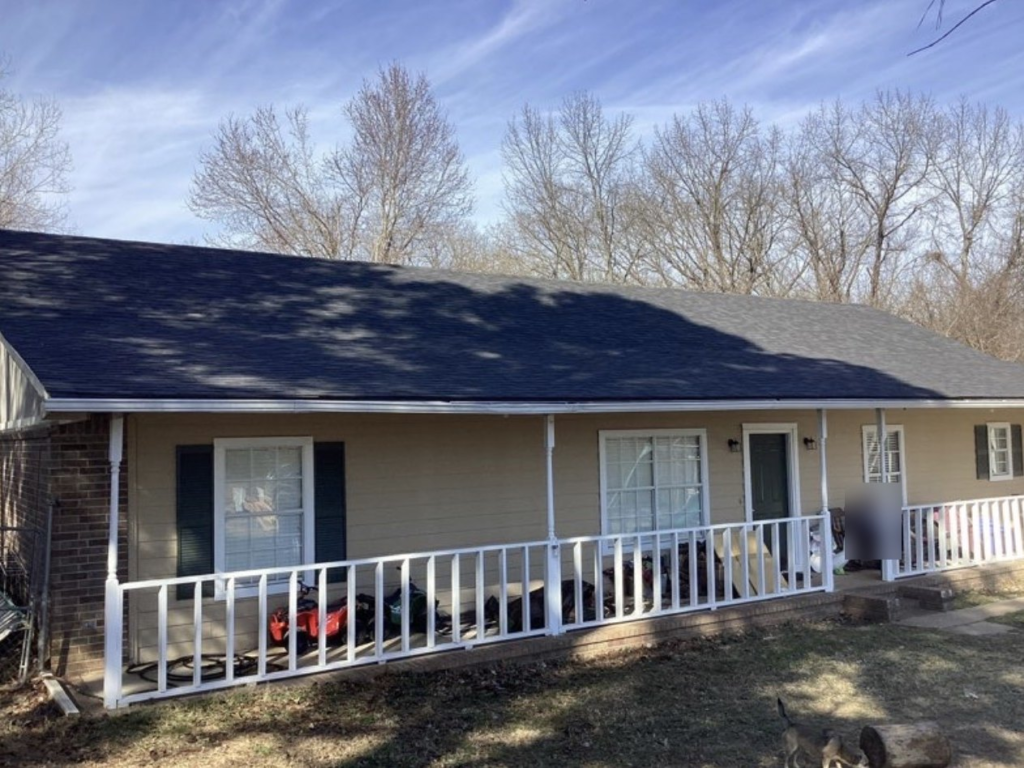
Hot attic in Coweta?
A free inspection covers your roof and its ventilation, with photos of what we find.
Read more about attic ventilation and roof repair.
Roofing and exterior services in Coweta
Frequently asked questions
Can ventilation be improved without a new roof?
Often, yes. Some vent work can be done as a repair. Other changes are easiest during a replacement.
Will adding more vents always help?
No. Adding exhaust without enough intake, or mixing exhaust vent types, can make airflow worse. Balance matters more than the number of vents.
Do you work on soffit and fascia too?
Yes. We repair and replace soffit and fascia, which is where intake ventilation usually lives.
Is the inspection free?
Yes, with no obligation. If we write you a roofing estimate, it includes the ventilation calculation for your attic.